
Are you thinking about visiting Iceland in the winter for your next trip?
This season will treat you to snow-covered landscapes, the Northern Lights, and an atmosphere quite different from that of an Icelandic summer.
Here are all the details to answer your question: Is Iceland safe in the winter?
With all our tips for a worry-free stay.
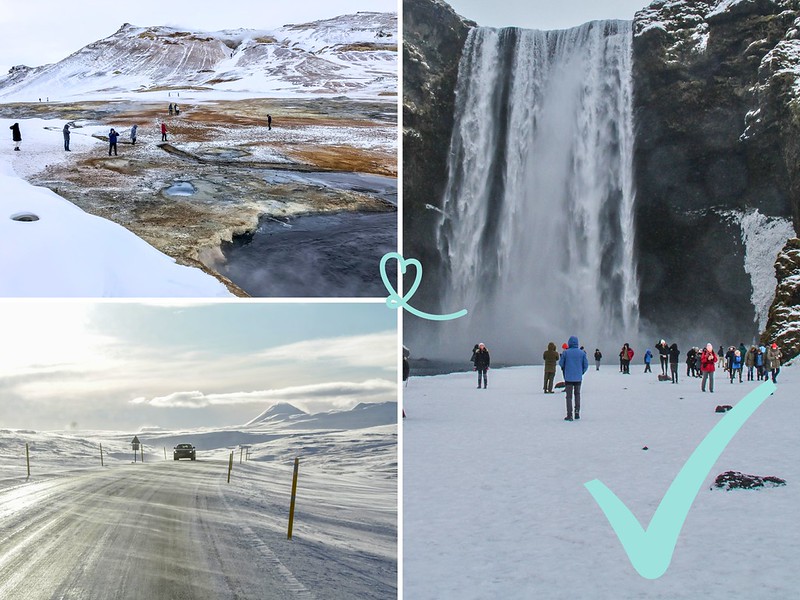
Is Iceland safe in the winter? Quick response
Yes, overall, Iceland remains a safe destination in the winter.
The main risks of the season are more related to the weather: slippery roads, sudden storms, and very short days. We’ve noticed for ourselves that being cautious about the weather matters much more here than being vigilant around other people. The country has one of the lowest crime rates in the world.
Iceland enforces Icelandic laws and is part of the Schengen Area.


Emergency Numbers in Iceland
112 is the number to remember for any emergency: police, ambulance, or fire department. Operators respond in English and Icelandic.
There is also an app called 112 Iceland, which is useful when hiking or traveling in remote areas, since it allows you to send your location to emergency services if needed.
We recommend that you install it before you leave, as cell service can sometimes be weak in remote areas.
Advice:
Check the Safetravel.is website before every trip. It provides information on road conditions and weather alerts, and allows you to leave a travel itinerary that emergency responders can access.

Driving in Iceland in the Winter
This is the main area of concern for the season. Roads may be icy, snowy, or closed depending on the region, particularly mountain roads (F roads), which remain impassable for much of the winter.
Wind is also an underestimated hazard: strong gusts can destabilize a light vehicle or make it difficult to open a car door in an exposed parking lot.
Route 1, which circles the island, remains open most of the time, but some sections are temporarily closed after heavy snowfall.

Advice:
- Rent a vehicle equipped with studded or winter tires and, ideally, all-wheel drive
- Check road.is for real-time road conditions
- Always allow more time than usual between two stops
- Avoid driving at night in remote areas if the weather takes a turn for the worse
- Always keep your gas tank half full, as gas stations are few and far between outside of cities
- Check out our article on winter driving—it includes a video!

What to do if your car gets stuck or the road closes
- not to proceed despite a closure
- Stay in the vehicle during a storm
- Call 112 if necessary
- Do not attempt to free a car on your own in an exposed area
- Bring water, food, a blanket, a flashlight, and a charger
- Check that the hosting service is still accessible before you leave
RENTING A CAR IN Iceland
Discover the best offers on Discovercars, our preferred platform!
On Route 1, no 4WD required, off Route 1, it depends on your plans.

Weather and Storms
The weather in Iceland changes quickly; in fact, there’s a local saying that goes: “If you don’t like the weather, just wait five minutes.” In winter, wind and snowstorms can develop within a few hours and shut down roads, airports, or tourist attractions.
Vedur.is, the official website of the Icelandic Meteorological Institute, issues alerts categorized by color (yellow, orange, red) based on the expected severity. A red alert means it’s best to cancel any travel plans.
Be sure to check this website every morning before hitting the road, and also after every stop.
Be sure to read the information signs before the mountain passes.

Walking on Snow and Black Ice: The Risk of Slipping
In winter, sidewalks, trails, and even some parking lots become covered with a thin layer of ice that is often invisible, known as black ice. It is the most common cause of injury among visitors, far ahead of traffic accidents.
Falls occur just as often in the city—in front of a hotel or restaurant—as they do at natural sites such as waterfalls or scenic overlooks, where the frozen ground makes every step uncertain.
We slipped and fell several times ourselves the first time we visited the island in winter!

Crampons—small, studded soles that slip over your shoes—completely transform the experience. They can be put on in just a few seconds and let you walk on ice without fear of falling.
Advice:
- Buy a pair of crampons
- Walk slowly and put your foot down flat, especially when going downhill
- Avoid walking with your hands in your pockets so you can keep your balance if you slip
- Remove your cleats before entering a building, as they can cause you to slip on tile or hardwood floors

Cold, Hypothermia, and Frostbite
In Iceland, the temperature reading alone isn’t enough to gauge how cold it actually feels. Wind and humidity can greatly intensify the sensation of cold, especially on beaches, near waterfalls, on glaciers, or while watching the Northern Lights. Fingers, toes, the nose, and the ears are also susceptible to frostbite, especially in strong winds or during prolonged inactivity.
Hypothermia occurs when the body loses heat faster than it can produce it. Early signs may include severe chills, extreme fatigue, difficulty speaking clearly, loss of coordination, or unusual confusion. In this case, you should quickly find shelter, change out of any wet clothing, and call 112 if the person’s condition does not improve.

Advice:
- Wear several layers of clothing rather than a single very thick garment
- Choose a waterproof and windproof outer layer
- Protect your hands, head, neck, and ears
- Change out of wet clothes right away
- Keep warm clothes and a blanket in the car
- Avoid standing still for too long while watching the Northern Lights
- Go inside to warm up as soon as you lose feeling in your fingers or feet
- See our article on what to bring

WHERE TO STAY IN Iceland
Our independent picks for the accommodation of your dreams:

Visiting an ice cave: Safety Precautions to Take
Ice caves, which form naturally each winter beneath certain glaciers such as Vatnajökull, are among the most sought-after experiences of the season. However, access to them is limited to the coldest months, as the structure becomes unstable as soon as temperatures rise.
The main danger comes from the ice itself: chunks can break off from the ceiling, and the floor of the cave is often slippery or uneven. Also, the layout of each cave changes from year to year depending on thawing and freezing.

For this reason, exploring on your own is strongly discouraged—and in fact impossible—for most caves open to the public. A certified guide assesses conditions on the day of the trip and may cancel the outing if the ice does not appear stable.
- Always book a tour led by a certified guide
- Please wear the helmet provided at all times while inside the cave
- Follow the path indicated by the guide, without straying to take a photo
- Dress warmly; the indoor temperature is often around 0°C.
- See our article on ice caves

Short Days and Lighting Conditions
In December, the sun rises around 11 a.m. and sets around 3:30 p.m., which leaves little time for outdoor activities.
The days are longer in February and early March.
This prolonged darkness isn’t dangerous in itself, but it does require you to organize your days differently: it’s best to plan your trips and visits to natural sites during daylight hours.
In addition, some secondary roads are not lit, which makes it difficult to see road signs and spot hazards such as black ice.
Advice:
Plan your longest trips early in the day, and always keep a headlamp and a portable charger in your bag.

The animals
In the summer, sheep are the biggest hazard on these Icelandic roads—but you won’t see them in the winter.
However, you may encounter reindeer crossing the fjords in the east. This happens quite often, so be careful if you see a reindeer near the road.
It’s very rare, but you might also see polar foxes darting out in front of your car. Since they turn white in the winter, they’re hard to spot. We spotted one, and they really do disappear in the snow!

UNFORGETTABLE ACTIVITIES IN winter
- Visit an ice cave
- Glacier hiking
- Whale watching (from Reykjavik, Husavik or Akureyri)

Northern Lights: A Few Precautions
Watching the Northern Lights attracts many visitors in the winter, and the phenomenon itself poses no risk. The dangers stem more from the circumstances: driving at night, cold weather, and unlit and sometimes icy roads to reach a viewpoint far from the city lights.
Advice:
- Park only in designated parking spaces
- Dress in layers; the wait may last 30 minutes or more
- Let someone know your plans if you’re going out alone in the evening
- Book a guided tour!

Hiking in Iceland in Winter
A hike that’s easy in the summer can become difficult—or even dangerous—in the winter. Snow can hide the trail, rocks, streams, or patches of ice. The trail markers can sometimes be hard to spot, and the weather can change quickly while you’re hiking.
Shorter days also reduce the amount of time available. You should allow enough time to return before nightfall and be prepared to turn back if the wind picks up, visibility decreases, or the trail becomes difficult to follow.
Before you leave, check the weather forecast and see if there are any closures. Don’t rely solely on the estimated time listed on a hiking app, as it’s often based on summer conditions.
Never venture out alone on a glacier or in an area with crevasses!

Natural Hazards: Volcanoes, Glaciers, and Geothermal Areas
Iceland has many active volcanoes, and an eruption is always a possibility, particularly on the Reykjanes Peninsula in recent years. Authorities are closely monitoring seismic activity and quickly closing off affected areas if there is a risk.
Geothermal areas such as Geysir and Hverir feature boiling water springs and molten mud. It is essential to stay on the marked trails, as the ground can be deceptive on the surface.
Glaciers, for their part, hide deep crevasses. We do not recommend exploring the area on your own in winter; it is best to hire a certified guide for a glacier hike or a tour of an ice cave.

Traveling Alone in Iceland in Winter
Iceland is consistently ranked among the safest destinations for women traveling alone, even outside the tourist season.
Winter safety precautions mainly concern how you plan your trip: opt for organized excursions to glaciers and remote areas, and avoid going on impromptu hikes since it gets dark early.
Always let a loved one know your plans for the day.


It’s time to book!
Compare everything: companies, prices, schedules and availability.
Swimming in Winter: Hot Springs and Pools
Geothermal baths such as the Blue Lagoon, the Sky Lagoon, and those in Myvatn are among the must-see attractions of an Icelandic winter. The hot water contrasts with the freezing air—an experience that is safe as long as you follow a few simple rules.
You should avoid staying outside with wet hair for too long, as your hair can freeze quickly. Also, when leaving the pool, the path to the locker rooms may be slippery due to frost forming on the floor.

Is the water safe to drink in Iceland?
Yes, without a doubt. Icelandic tap water comes from filtered natural springs and is among the purest in the world.
The hot water, on the other hand, gives off a slight sulfur smell due to its geothermal origin, but it is completely safe.
Scams and Fraud, Theft and Petty Crimes
Iceland remains one of the safest countries in the world in this regard. Theft and assaults on tourists remain rare, even in Reykjavik.
However, some basic precautions are still advisable in crowded places, such as Christmas markets in December or downtown bars on weekends, where the crowds can make it easy to get distracted and lose your belongings.
Scams targeting tourists remain rare in Iceland.

Safety in Reykjavik
Reykjavik is a safe capital city, even at night and in winter. The crime rate there remains very low, and the locals are generally helpful to visitors who find themselves lost in the cold or snow.
Sidewalks can become slippery after a snowfall, especially early in the morning before snow removal equipment has passed through.
Learn more about Reykavik’s attractions.

Travel Insurance for Iceland in Winter
Travel insurance is not required to visit Iceland, but it can be especially useful in the winter. Storms, road closures, and tour cancellations may disrupt the itinerary, and certain activities carry specific risks.
Before you leave, make sure your insurance policy covers medical expenses, emergency assistance, repatriation, trip cancellations, and transportation delays. European travelers can also bring their European Health Insurance Card, but it is not a substitute for comprehensive travel insurance.
Certain activities, such as snowmobiling, glacier hiking, ice climbing, or cave tours, may be excluded from standard policies. Therefore, you should check the coverage terms before booking.
PLAN YOUR TRIP TO iceland IN WINTER
- Best of
Iceland’s winter landscapes
Best things to do in Iceland in winter
The most beautiful waterfalls
Ice caves
Best excursions from Reykjavik

- Practical advice
How to rent a car in Iceland
Winter driving tips
Where to stay in Iceland in winter
Itineraries: 3 days – 4 days – 5 days – 1 week – 10 days